

What Are MTG Proxy Cards? A Casual Commander Guide
TokenFellaTrying a new Commander deck can get expensive before you’ve even played your first game. Maybe you want to see if you enjoy the deck. Maybe you’d rather spend that money on something else. Proxy cards give you a way to play with those cards without buying the originals. Talk to your group before bringing them to game night, though. Everyone should know what’s in the deck and be happy to play against it.
What are MTG proxy cards?
An MTG proxy card is an unofficial stand-in for a Magic: The Gathering card. During a game, it represents the card named on it. It isn’t an official printing or a collectible copy of that card.
A proxy can be a piece of paper with a card name on it. It can also be a printed card with custom art and readable rules text. Both serve the same basic purpose: letting you play a card you don’t have in your deck as an original.
If you’re new to proxies, start with three questions:
- Is my group happy to play with them?
- Can everyone easily tell which cards they represent?
- Does this deck fit the kind of game we want to play?
Those answers matter more to a good game night than how much anyone spent on their cards.
Why use proxies in Commander?
Try a deck before spending more on it
A deck can look fun on a decklist and feel very different once you play it. Maybe it takes too long to get going. Maybe you spend half the game keeping track of small triggers. Or maybe you love it and want to keep playing.
Using a few simple stand-ins lets you find out. You can swap cards, try another version, and work out what you enjoy.
Keep your originals at home
You might already own a card but prefer to leave it in a binder. In a group that agrees to it, a proxy can take its place for casual games. Owning the original still doesn’t give you automatic permission to use a proxy at an event.
Give the deck a look you enjoy
Custom art is another reason to use proxies. You might want a whole deck with a dark fantasy look, or an anime version of your favorite commander. A shared art style can make the deck feel more like yours.
Keep the card names and game information easy to find. Your friends still need to know what’s about to attack them.
Can you use proxy cards in Commander?
For a casual game with friends, agree on it as a group before you start. Some groups welcome full proxy decks. Others have limits, such as only using cards you already own. Ask what works for your table.
Here’s a simple way to bring it up:
“I’ve brought a proxy deck tonight. Are you all okay with that? I can show you the list before we start.”
Then talk about the deck itself. Does it win quickly? Does it use combos that can end the game at once? Is everyone looking for a relaxed game or a stronger match?
Using proxies doesn’t have to mean adding the strongest cards you can find. Build for the game your friends want to play.
If you’re heading to a store or an event, check with the organizer too. A friend saying yes doesn’t tell you the store’s rules.
Can you use proxies in MTG tournaments?
Player-made or purchased proxy cards are not allowed in sanctioned Magic tournaments. These are events run under official Magic tournament rules.
A judge-issued proxy is a separate exception under those rules. It is a replacement approved by the head judge in specific circumstances. You can’t bring your own proxy and treat it as that exception.
For the source, read Wizards’ explanation of proxies and playtest cards. For a particular event, ask the organizer before you go.
What should you look for in a proxy deck?
If you decide to get printed proxies, look beyond the cover image. You’ll be reading and handling these cards for a whole game.
- Clear names and text. You should be able to find the card name, cost, and rules without hunting through the art.
- The full decklist. Check which cards you’re getting and whether the deck looks fun to play.
- A clear contents list. Extra tokens, spare cards, and other versions of the commander are not all part of the deck you shuffle.
- Both sides when needed. If a card has two faces, check how you’ll use and read each side.
- An openly unofficial design. Everyone should understand that these are proxies. Never present them as original cards.
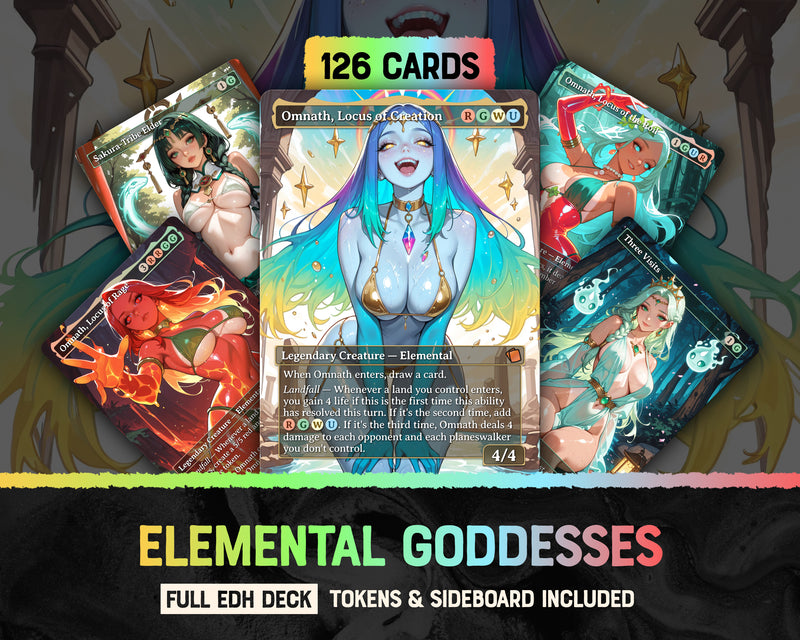
For example, a set might contain 126 physical cards, with 100 in the deck you play. The remaining cards can include tokens, spares, or extra versions of the commander. Read the breakdown before you shuffle everything together.
For custom art, look at several cards from the deck. One good commander image doesn’t tell you whether you’ll enjoy the rest.
A quick check before your first game
Once your group has agreed, take a few minutes to get the deck ready:
- Read through the list. Look up cards you don’t know before sitting down to play.
- Separate the extras. Keep spare cards and extra commander versions out of the deck. Put tokens within reach.
- Use matching opaque sleeves. You shouldn’t be able to tell which card is next from its back or how it feels.
- Keep a decklist handy. It helps when someone wants to check a card with unfamiliar art.
- Explain what the deck does. Give the table a quick idea of its plan before you draw your opening hand.
If you’re using paper stand-ins, put each one in a sleeve in front of a backing card. Check that the cards feel consistent when you shuffle.
Finding a proxy deck you’ll want to play
Start with the kind of game you enjoy. Do you like building up an army, bringing creatures back from the graveyard, or casting lots of spells? Pick a deck that sounds fun to you and fits your group.
At TokenFella, we make printed Commander proxy decks in two art styles. You can browse our Dark Fantasy Commander proxy decks or our Anime and Waifu Commander proxy decks. Check the decklist and contents on the product page before choosing one.
Still working out what you like? Join the TokenFella Discord to talk decks, see card designs, and share ideas. You’re welcome to hang out while you figure out your next deck.